ServicesIron and Sulfur Removal
Iron and Sulfur Removal in Lockhart
Rust-colored rings in the tub, a rotten-egg smell from the shower, laundry that comes out dingy. We measure what is causing it, explain it plainly and install a filter matched to your home's numbers, so the fix lasts.
What iron and sulfur removal actually does
Iron and hydrogen sulfide are two of the most noticeable things that can show up in household water. Iron leaves orange and brown stains on porcelain, grout and clothing. Hydrogen sulfide is a gas that gives water its sulfur smell, and it can also tarnish silver and darken fixtures. Neither one is usually a sign of a health crisis, but both make your home less pleasant to live in.
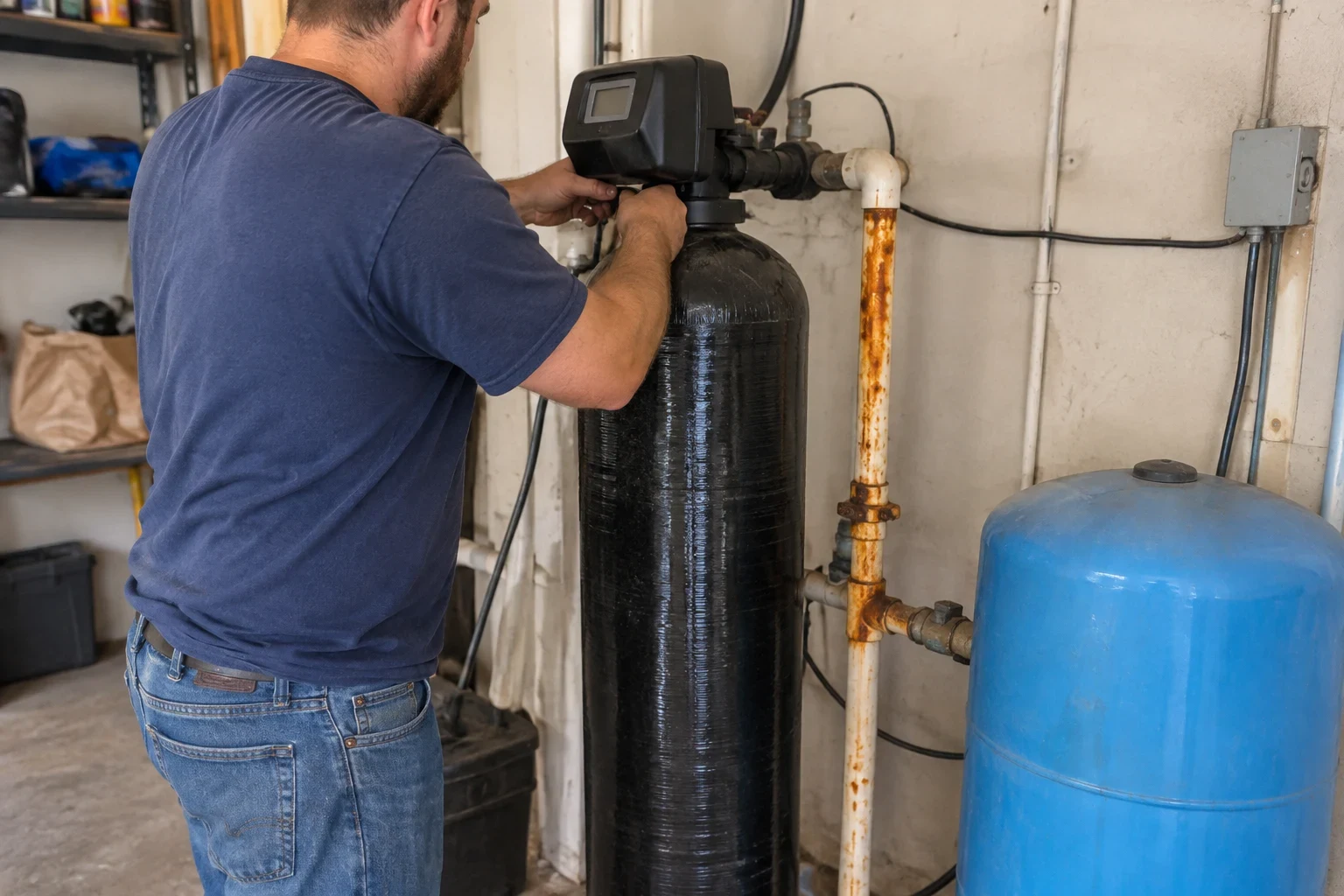
Our approach is to oxidize the iron and sulfur so they become solid particles, trap them in a filter bed, then rinse that bed clean on a schedule. The right method depends on the levels, the pH and which form of iron you have, which is why we test before we recommend anything.
Problems often appear suddenly, after heavy storms, a long dry spell or plumbing work. When that happens, a calm first step is a test, not a rushed purchase. We would rather tell you the change is temporary than sell you equipment you do not need.
What the work includes
A water test before any quote
We check iron, manganese, hydrogen sulfide and pH, the four readings that decide which system will work. You see the numbers and we walk through what they mean.
Checking the water heater first
If the smell is only on the hot side, the cause is often the water heater's anode rod reacting with the water, not your supply. We look at that before suggesting a whole-house filter.
A filter matched to your levels
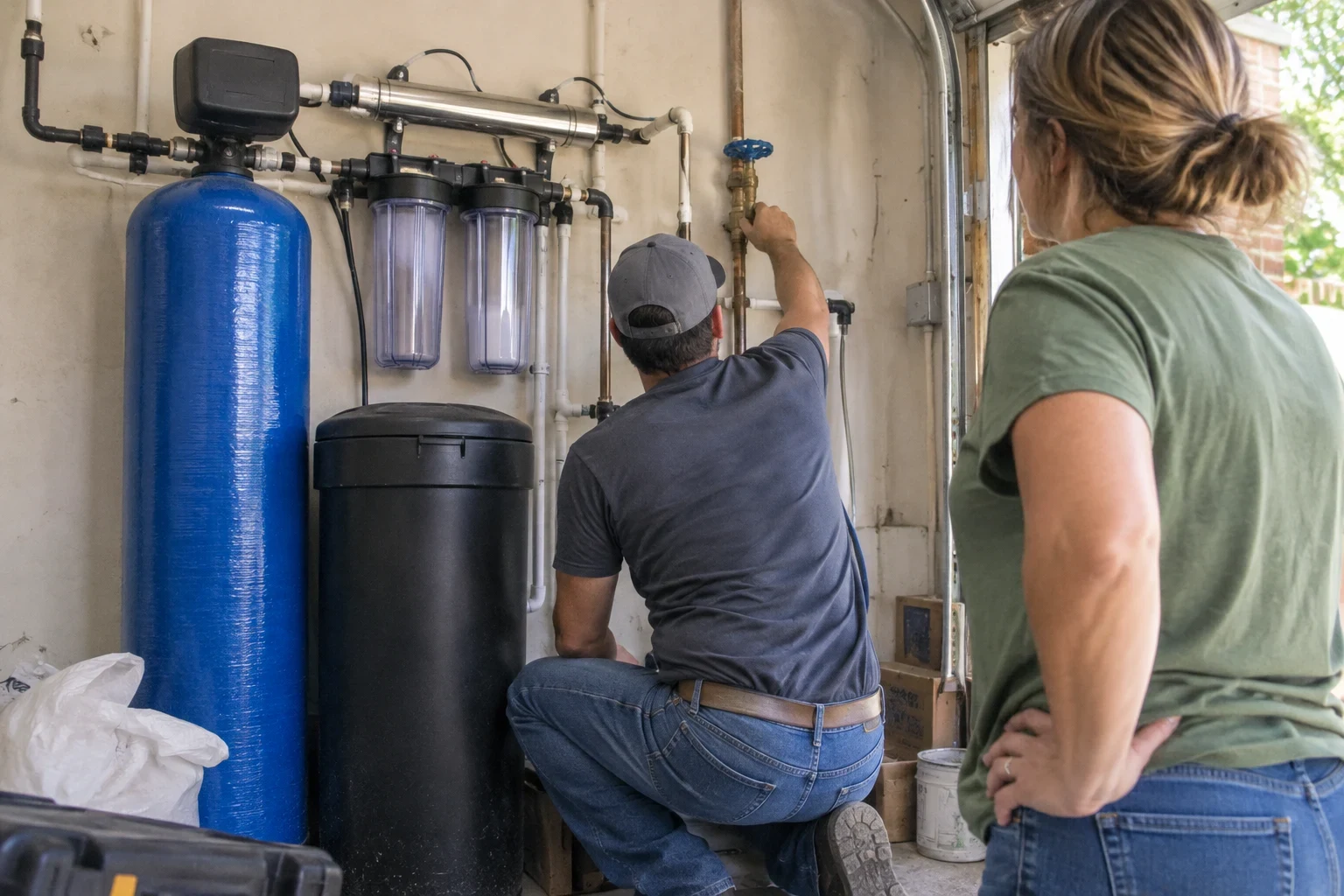
Light sulfur may only need catalytic carbon. Moderate iron and sulfur usually call for an air-injection oxidizing filter. Heavier loads can need a feed system that adds an oxidizer ahead of the filter.
Careful installation
We lay down floor protection, add a bypass valve so water can be routed around the system, and run a proper drain line for the backwash. Installation is free, and we clean up before we leave.
Setup and a clear handoff
We program the backwash cycle for your household's water use and show you how to read the control valve. Before we go, we point out the settings that matter and the few changes in your water that would be worth a call.
Signs your water needs iron or sulfur treatment
- Orange or brown staining
- Rings in toilets, streaks below faucets and rust-colored grout point to iron. Bleach tends to set iron stains in fabric rather than lift them.
- A rotten-egg smell
- That smell is hydrogen sulfide. Note whether it comes from cold water, hot water or both, since that tells us where to look.
- Water that clears, then turns cloudy
- Water that pours clear and turns yellow or orange after sitting in a glass usually carries dissolved iron, which oxidizes once it meets air.
- Black specks or darkened fixtures
- Black residue can come from manganese or from sulfur reacting with metal. Both respond to the same family of oxidizing filters.
- A sudden change after a storm
- If color or odor shows up after heavy rain or flooding, test before you treat. Some changes settle on their own; others need a filter.
How a job runs, from first call to clear water
- 1
Your free water test
We sample at your kitchen tap, and if the readings call for it, we also check the line where your supply first comes into the house. Results come with a plain explanation and a written recommendation.
- 2
An honest recommendation
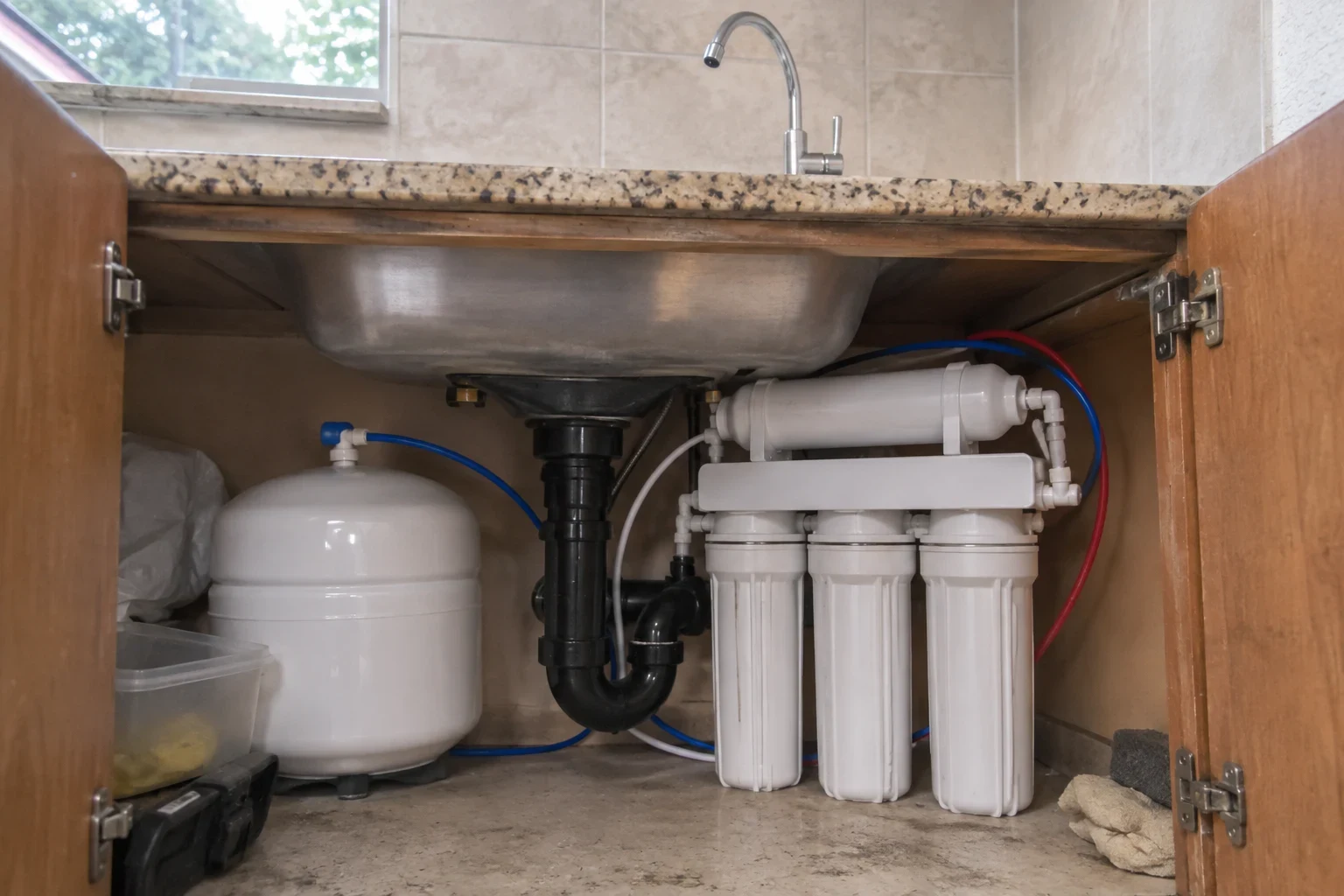
We tell you which system fits and why, and whether a smaller fix like an anode rod swap would do. If a water softener or reverse osmosis would serve you better, we say so.
- 3
Installation day
Most installs take part of a day. Water is off only while we connect the system, and we test again once it is running.
- 4
Follow-up
After the first few backwash cycles, we check that the water is clear and odor-free. If the numbers need adjusting, we adjust the settings.
What shapes the cost
Iron and sulfur systems vary more than most water equipment, because the right one depends entirely on what is in your water. We give you a written quote after the test, with each part listed. Installation is free, so the price reflects the equipment your water actually requires.
- Iron and sulfur levels
- Low readings can be handled with simpler media. Higher readings need oxidizing filters or a chemical feed, which cost more up front.
- Your household's water use
- More bathrooms and more people mean a larger tank so the filter can keep up between backwash cycles.
- pH and manganese
- Water with low pH or added manganese may need a neutralizing stage or a different media, which adds to the system.
- Plumbing and drain access
- Backwash filters need a drain and an electrical outlet nearby. A tight utility space or a long drain run takes more materials and time.
Questions about iron and sulfur removal
- Will a water softener take care of iron?
- A softener can remove small amounts of dissolved iron, but it struggles with higher levels and with iron that has already oxidized. Iron can also foul the softener resin over time. For most iron problems, a dedicated oxidizing filter is the better tool, sometimes paired with a softener if hardness is also high.
- Why does only my hot water smell like sulfur?
- That usually points to the water heater. The magnesium anode rod inside can react with sulfate in the water and produce hydrogen sulfide. Replacing it with an aluminum-zinc or powered anode often solves the smell without any filtration.
- How much upkeep does an iron filter need?
- Air-injection systems clean themselves on a timed backwash, usually overnight. The media lasts several years before it needs replacing. Feed systems need the solution tank topped up periodically, and we show you how.
- What warranty comes with the equipment?
- We warrant the systems we install: lifetime warranty on tanks and ceramic discs, 5 years on the control valve, circuit board and filter media, and 1 year on labor. We explain what applies to your specific system before installation.
- The smell started after a big storm. Should I buy a filter now?
- Not right away. Storms and flooding can change water temporarily, and some of those changes clear within days or weeks. A test tells us whether the problem is passing or lasting, and we will recommend equipment only if the numbers call for it.
Find out what is behind the stains and smell
A short phone call sets up your free water test. We come to your home in Lockhart or nearby towns like Luling and San Marcos, measure the iron and sulfur, and give you a written recommendation.