ServicesWell Water Filtration
Well Water Filtration and Treatment in Lockhart
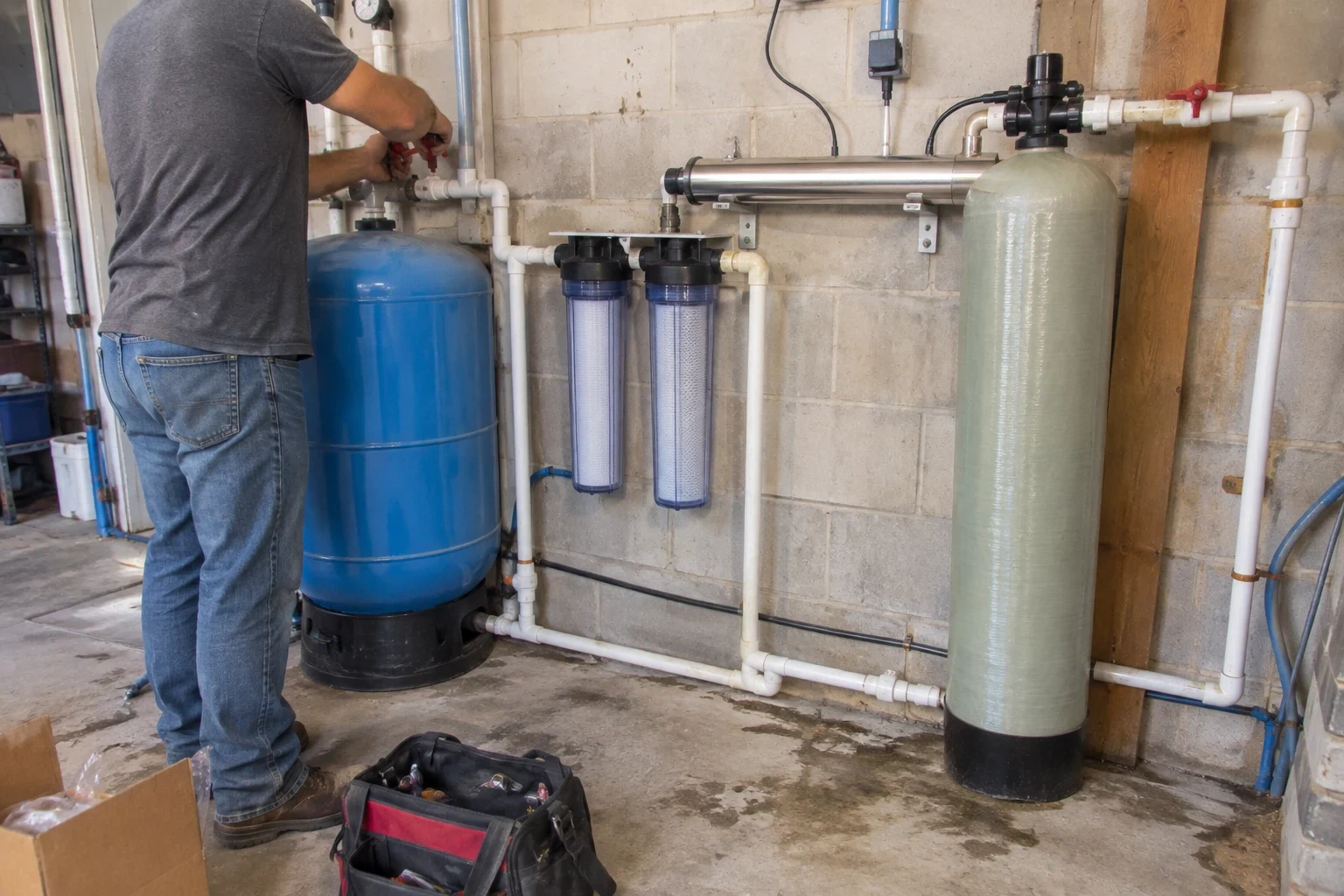
A private well has no utility testing it for you. We begin with a free water test, then fit filtration to what your well actually holds: sediment, iron, a sulfur smell or bacteria after heavy rain. Installation is free, and the system is sized to your home.
Clean, consistent water from your own well
Well water changes with the ground around it. A dry summer can concentrate minerals, and a hard rain can push surface water, silt and bacteria toward a wellhead that sat fine for years. That is why we never recommend equipment before we know what is in the water.
After a storm or a flooded yard, the sensible first move is a test, not a guess. If your water turns cloudy, smells different or the wellhead was under water, we test first and tell you plainly what the results mean. Sometimes the answer is a simple sediment filter. Sometimes it is a multi-stage system with UV disinfection.
Around Lockhart and out toward Luling and Redwood, plenty of homes rely on private wells. We install each system with durable tanks, quality media and clean, accessible plumbing so it is easy to service for years.
What a well filtration system can include
Free water test and walkthrough
We check your water and look at how it enters your home: the pressure tank, the line size and where equipment can sit. You get results explained in plain language.
Sediment filtration
A first stage catches sand, silt and grit before it reaches fixtures or downstream filters. This matters most after heavy rain, when wells often carry more particles.
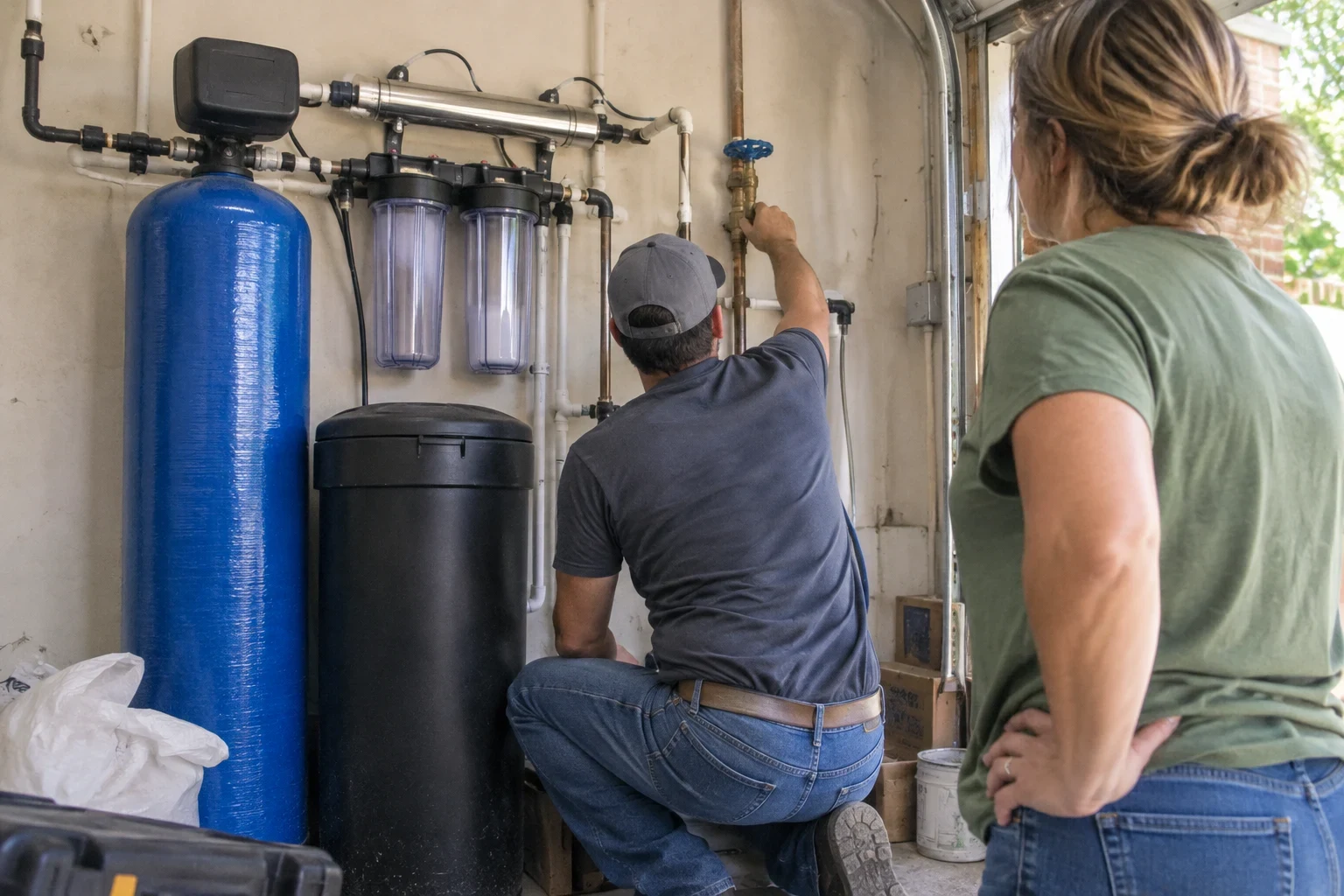
Iron, manganese and sulfur stage
If the test shows staining minerals or a rotten-egg odor, we add an oxidizing media tank. For heavier cases we may point you to our Iron and Sulfur Removal page for a dedicated setup.
UV disinfection
An ultraviolet chamber treats bacteria without adding chemicals to the water. We place it at the end of the system, once the earlier stages have cleared out grit and color that would block the light.
Carbon for taste and finish
A carbon stage can take off lingering odors and improve taste at every tap. We plumb in a bypass valve so the system can be serviced without shutting off the house.
Signs your well water needs attention
- Cloudy water after rain
- Water that turns hazy or gritty after a storm suggests surface water or sediment is reaching the well. Have it tested before drinking it.
- Your wellhead was flooded
- If standing water covered the wellhead, assume the water may be contaminated until a test says otherwise. We can test and recommend disinfection if it is needed.
- Orange or black stains
- Rust-colored rings in toilets or dark spots on fixtures usually point to iron or manganese. Left alone, these minerals also coat pipes and appliances.
- A rotten-egg smell
- Hydrogen sulfide gives well water that odor, often strongest on the hot side. It is fixable once we know the level.
- Filters clogging quickly
- If a cartridge filter turns brown within weeks or your pressure keeps dropping, the water is carrying more than the current setup can handle.
How the work goes
- 1
A call and a free test
You phone us, and we pick a visit that suits your schedule to sample the water where it comes into your home. If you have had a storm, flooding or a sudden change in the water, mention it so we check for the right things.
- 2
Results and a clear recommendation
We go over the numbers with you and suggest only the stages your water needs. You get a written quote by phone or in person before anything is installed.
- 3
Installation day
We lay down drop cloths, shut off the water briefly and install the system near your pressure tank. Most homes are back on water the same visit, and we clean up and haul off packaging before we leave.
- 4
Retest and handoff
Once the system has run, we can retest to confirm it is doing its job. We show you the bypass valve and explain when filters or media will need attention.
What shapes the cost
Because we offer free installation, most of the cost is the equipment itself. What that equipment needs to be depends on your test results. We price it line by line so you can see what each stage does.
- What the test finds
- Clear water with mild sediment needs far less than water carrying iron, sulfur and bacteria. Each added stage adds a tank or chamber.
- Flow rate and household size
- Larger homes with several bathrooms need larger tanks and higher flow equipment so pressure stays strong when showers and appliances run together.
- Space and plumbing access
- Equipment near the pressure tank with room to work is simpler. Tight spaces or long pipe runs can change what we recommend.
- Ongoing upkeep
- Sediment cartridges, UV lamps and media all have replacement schedules. We explain those costs up front so nothing comes as a surprise later.
Well water filtration questions
- Should I test my well after a flood or heavy storm?
- Yes. Floodwater can carry bacteria and silt into a well, and you cannot see or taste most of it. A test tells you whether the water is safe and what kind of filtration or disinfection makes sense. Until then, bottled water for drinking is the cautious choice.
- Can one system handle iron, sulfur and bacteria together?
- Often it can, using stages in the right order: sediment first, then iron and sulfur media, then UV. The sequence matters because ultraviolet light loses strength passing through cloudy or discolored water. Your test decides how many stages you need.
- What warranty comes with the equipment?
- We warrant the systems we install: lifetime warranty on tanks and ceramic discs, 5 years on the control valve, circuit board and filter media, and 1 year on labor. We will walk you through what applies to the parts in your system.
- Will filtration make my showers feel weaker?
- It should not, provided the equipment matches how much water your home draws at once. We choose tank diameters and fittings from your bathroom count and fixtures rather than a one-size setup. If flow slowly fades months later, that is usually a loaded sediment cartridge asking to be swapped.
- Do I also need a water softener?
- That depends on the hardness number in your results. Some wells run hard and many do not, so we look at the reading before suggesting anything. If softening does make sense, we can talk through Water Softener Installation or Salt-Free Water Conditioners as options.
Find out what is in your well
A free water test gives you real numbers to work from, especially after a storm or a sudden change in your water. From there we recommend only what your well needs.