ServicesWater Softener Installation
Water Softener Installation in Lockhart
We start with a free hardness test, then size a softener to your actual water and the way your home uses it. Installation is free, the work is tidy, and you get an honest answer if a softener is not the right fit.
How softening works, and whether your home needs it
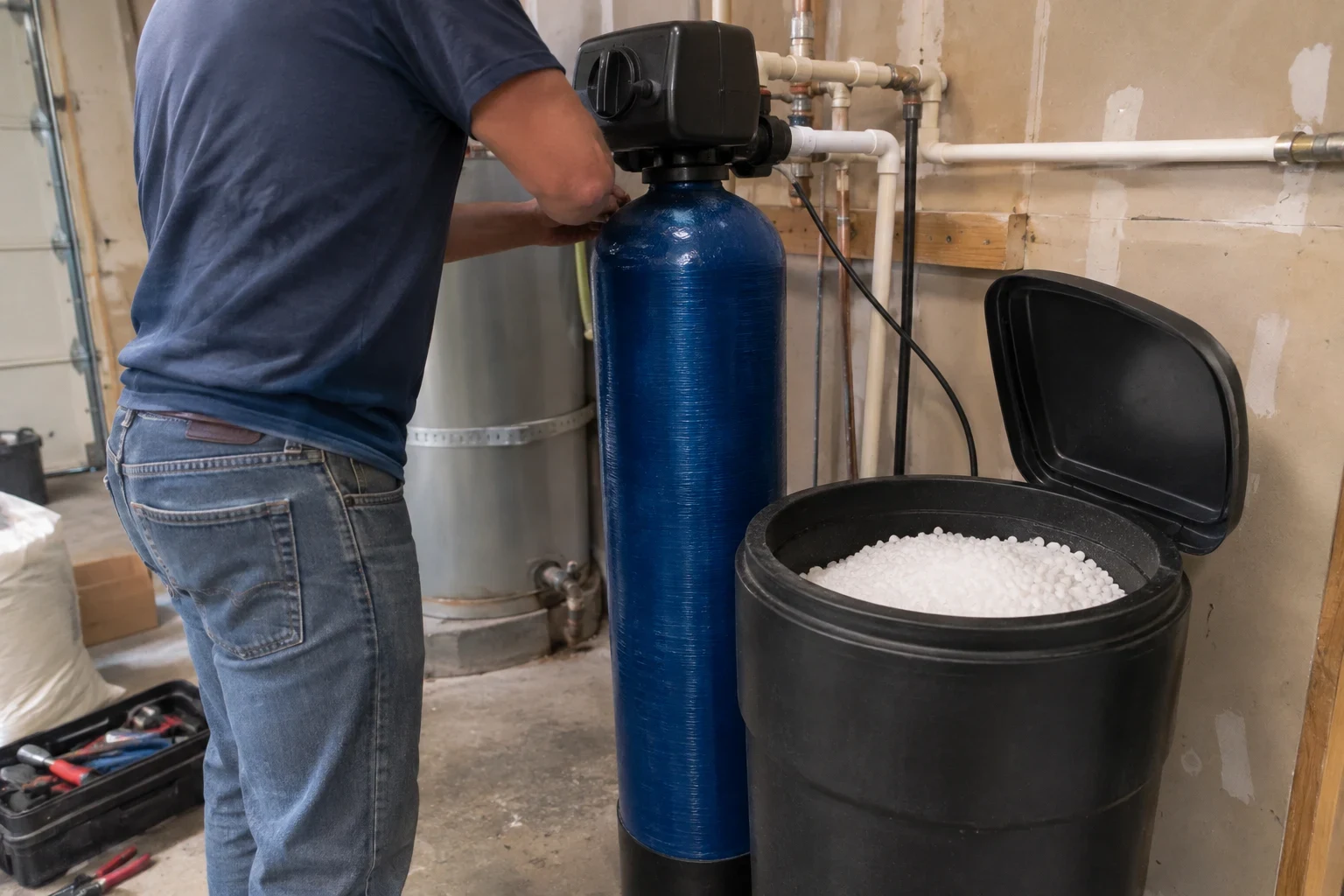
Hardness comes from calcium and magnesium, the minerals that crust faucets, cloud glassware and build scale inside your water heater. A softener sends your water through a tank of resin beads that trade those minerals for sodium or potassium. Once the beads have handled a measured volume of water, or on a set schedule, the valve rinses them with brine from the salt tank and they go back to work.
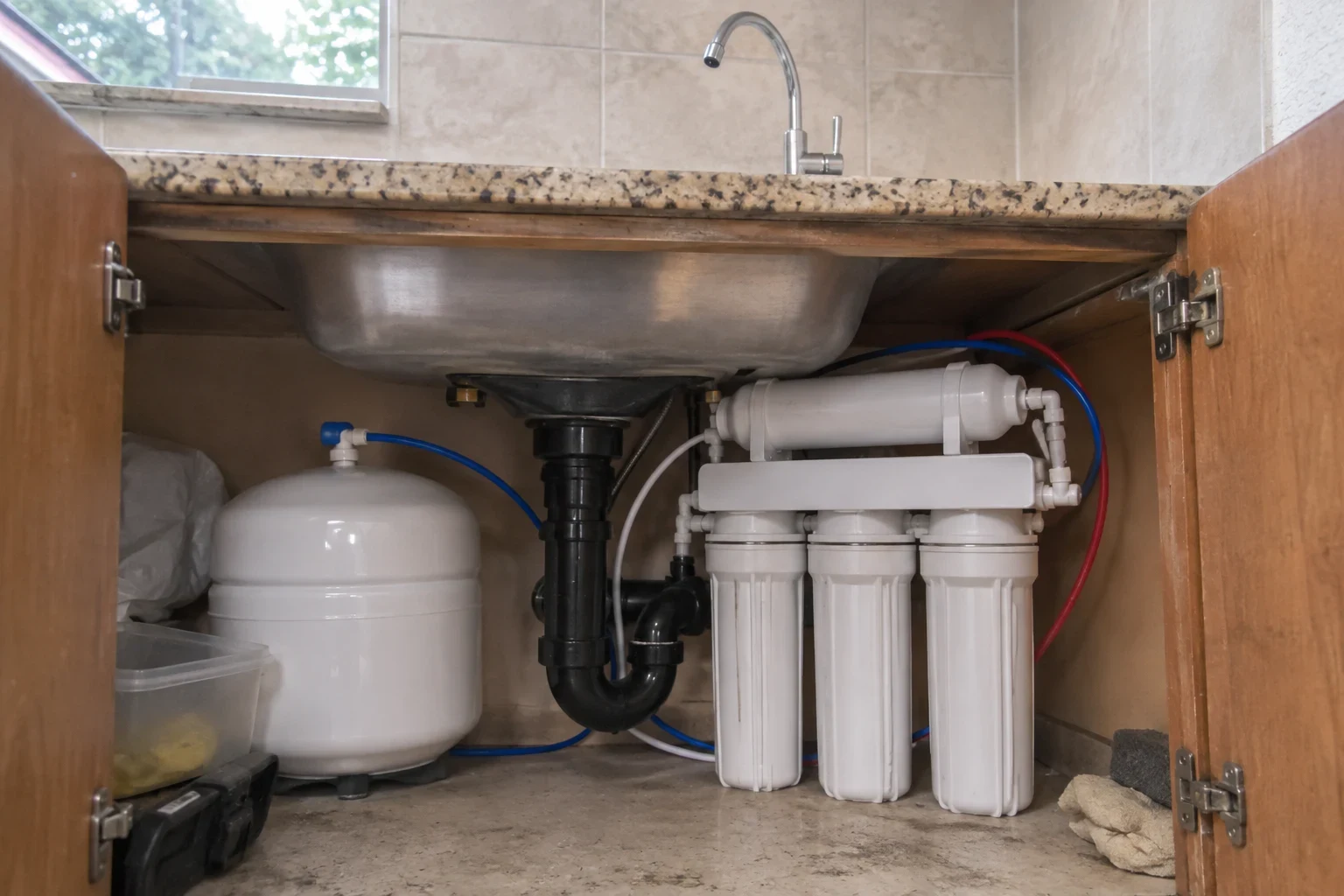
Hard water shows up often in Central Texas, but readings still vary from one house to the next, which is why we test before suggesting any equipment. When your numbers are modest, or you would like to skip salt entirely, a salt-free water conditioner may suit you better, and we will tell you that. Keep in mind that softening leaves chlorine taste untouched. For that, whole-home filtration or a reverse osmosis system under the kitchen sink is the right tool.
What the installation includes
Hardness test and sizing
We measure hardness at your tap and ask how many people live in the home and how you use water. That sets the grain capacity, so the unit neither runs short nor wastes salt.
Resin tank, brine tank and control valve
Both tanks go on a level, dry spot, and we program the control valve for your hardness. Metered valves regenerate on real water use instead of a fixed calendar.
Bypass valve
Every system gets a bypass, so water keeps reaching the house if the softener ever needs service.
Drain line with a proper air gap
The regeneration drain runs to a suitable drain with an air gap. That open space means rinse water cannot be drawn backward into the pipes you drink from.
Startup, salt and cleanup
We fill the brine tank, run a first regeneration, check each fitting for drips and leave the area as clean as we found it.
Signs your home could use a softener
Crust on fixtures and glass
White, chalky buildup on showerheads, faucet aerators and glass shower doors is mineral scale. It comes back within days of cleaning.
Spotty dishes and stiff laundry
Hard water leaves a film on glasses and makes towels feel rough, even with extra detergent.
Soap that will not lather
Calcium and magnesium tie up soap. You reach for more shampoo, and your skin and hair still feel coated after rinsing.
Rumbling or crackling from the water heater
Those noises often mean scale has settled at the bottom of the tank. The heater then works harder and wears out sooner.
An older softener that has stopped keeping up
Hard spots returning, salt that never drops or a hardened salt bridge in the brine tank all point to a unit that needs attention. A hard freeze or a long power outage can also scramble an older valve's settings, so have it checked soon rather than living with hard water for weeks.
How the work goes, from first call to soft water
- 1
Your call and free water test
You reach us by phone and we arrange a time to test your water at home. We share the readings with you on the spot and explain what they mean.
- 2
A written quote you can read
If a softener makes sense, we give you a written quote with the system size, the valve type and any plumbing parts the job needs. If it does not, we say that plainly.
- 3
Installation day
We shut off the water briefly, protect the floor, set the tanks and cut into your main line, usually where the line enters the house or at an existing softener loop. Most homes are without water for only part of the visit.
- 4
Startup and walkthrough
We run the first regeneration, test the water again to confirm it is soft, and show you the bypass, the salt level and the valve settings so nothing about the system is a mystery.
What shapes the price of a softener
Because installation is free, your quote mostly reflects the equipment and whatever plumbing parts your home calls for. We set a price only after testing your water and looking at where the system will go. Every line is written out before any work begins.
- Hardness level and household size
- Higher mineral readings and more people at home add up to more grains removed each day. That points to a larger resin tank.
- Type of control valve
- A metered valve that regenerates based on real use costs more at the start than a timer valve. Over the years it tends to use less salt and less water.
- Plumbing access
- Homes built with a softener loop already in place need very little extra work to connect. When we have to reroute the main line or run a long drain, the job takes more parts and more hours.
- Removing old equipment
- Taking out and hauling away a worn softener is a separate task. We list it on its own line so you can see what it adds.
Questions about water softeners
Something not covered here? (512) 710-0596
Will my water taste salty?
No. A softener adds only a small amount of sodium, and most people never notice it. The system can also run on potassium chloride in place of salt. Many homeowners pair it with a reverse osmosis system at the kitchen sink for drinking and cooking water.
Do I really need a softener, or could I use something else?
Your test results answer that. A softener is worth it when hardness is high. If hardness is moderate, or you would rather avoid salt and a drain line, a salt-free water conditioner is a reasonable choice, and we will walk you through both.
What does owning a softener involve week to week?
Very little. Every month or two, depending on your water use, you pour more salt into the brine tank. If the salt crusts over into a bridge, break it up, and look over the valve settings after any long power outage. The resin itself usually holds up for many years.
What warranty comes with the system?
We warrant the systems we install: lifetime warranty on tanks and ceramic discs, 5 years on the control valve, circuit board and filter media, and 1 year on labor. We go over what that means in plain terms before the installation.
Will a softener get rid of the chlorine taste?
No, those are two separate jobs. A softener handles hardness minerals only. For chlorine taste and odor we pair it with whole-home filtration, and water testing and analysis shows whether anything else is worth treating.
Find out how hard your water really is
We test at your home in Lockhart, Luling and nearby towns, explain the numbers and only recommend a softener when your water calls for one. Installation is free if you go ahead.