ServicesSalt-Free Water Conditioners
Salt-Free Water Conditioners in Lockhart
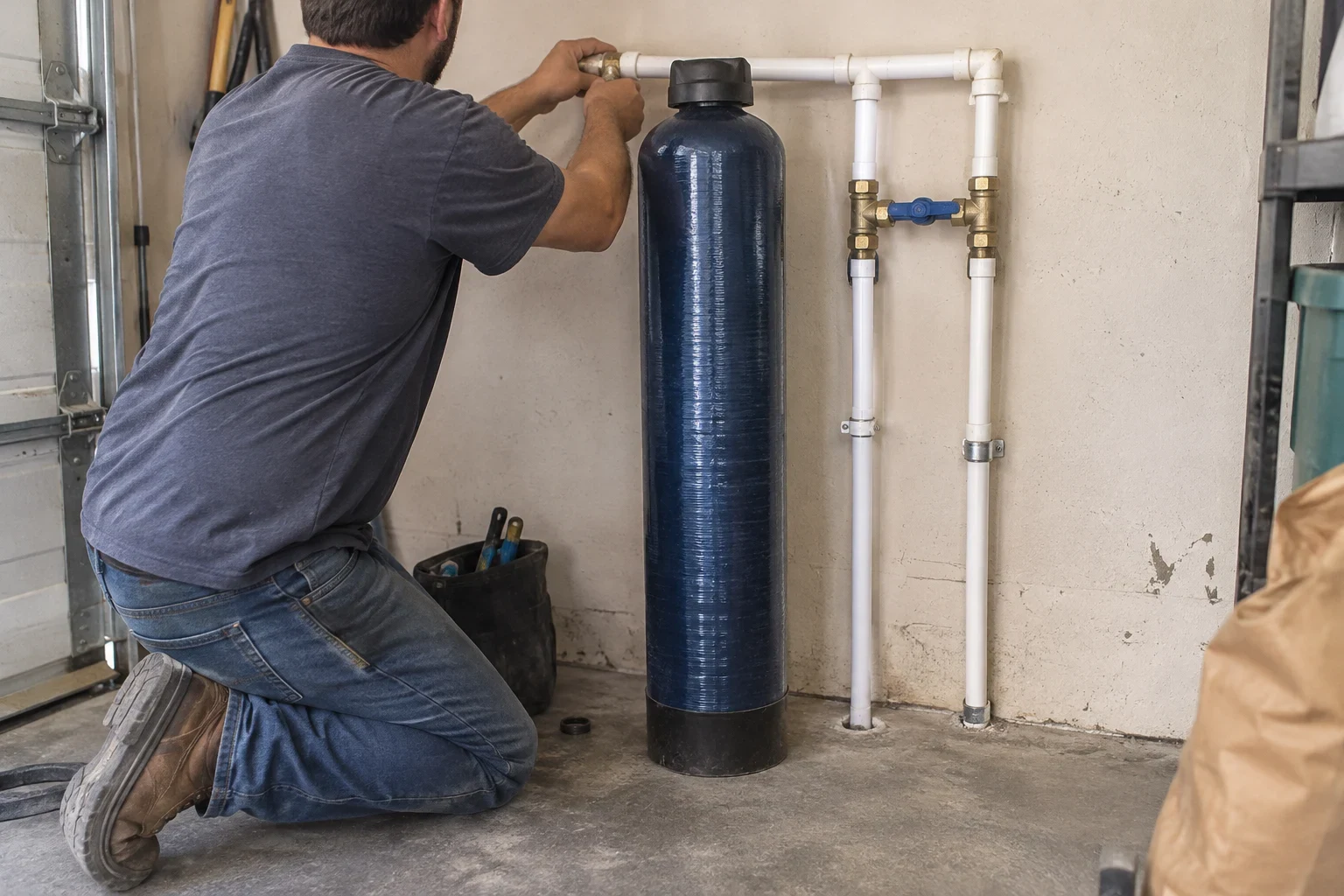
A salt-free conditioner keeps hardness minerals from crusting onto your fixtures, water heater and pipes. It needs no salt bags, no brine and no drain line. We test your water first so you know whether this system suits your home before anything is installed.
What a salt-free conditioner does, and what it doesn't
Most salt-free conditioners use a treated media inside a single tank. As water passes through, calcium and magnesium are changed into tiny, stable crystals that stay suspended in the water instead of sticking to hot surfaces. The minerals are still there. They simply stop forming the hard white scale that shortens the life of water heaters, clogs aerators and dulls tile.
That makes it the right call for many homes, but not every one. Hard water is common across Central Texas, and if you want the slick feel of fully softened water, or your hardness is very high, a traditional system from our Water Softener Installation page may serve you better. We will tell you which one fits once we have your test results.
There is also a practical reason homeowners ask about these units after a storm. A salt-free conditioner has no control head and no power cord, so it keeps working through an outage. If wind, a surge or a flooded garage has ruined an older softener, replacing it with a unit that has nothing electrical to fail is a sensible, unhurried choice.
What comes with the installation
A water test before anything else
We check hardness, chlorine, iron and a few other readings at your tap. Iron and manganese can coat conditioner media, so we need to know they are low before recommending this system.
Sediment prefilter
A cartridge filter goes ahead of the tank to catch sand and grit. It protects the media and is the part you will change most often.
Conditioner tank sized to your flow
We size the tank to the number of bathrooms and how many fixtures run at once, not the smallest unit that will fit. An undersized tank lets untreated water slip through at peak use.
Bypass valve and clean plumbing
We install a bypass so water keeps flowing to your home if the system ever needs service. Connections are made at the main line with care for your floors and walls, and we clean up before we leave.
Free installation
Installation is free with the system. The quote we give you by phone covers the equipment and any prefiltration your test calls for.
When a salt-free conditioner makes sense for your home
- Scale forming where water dries
- Pale, stony deposits gather on aerators and showerhead nozzles, and the spray gradually loses its force. A conditioner stops new buildup from taking hold on those surfaces.
- Popping or rumbling from the water heater
- Noises like these often mean minerals have settled in the bottom of the tank. Less buildup there lets the heater work more efficiently and last longer.
- You're done carrying salt bags
- There is no salt to lift, no brine tank to watch and no salty rinse water sent down the drain. Some homeowners also choose it to keep added sodium out of their water.
- Nowhere convenient for a drain
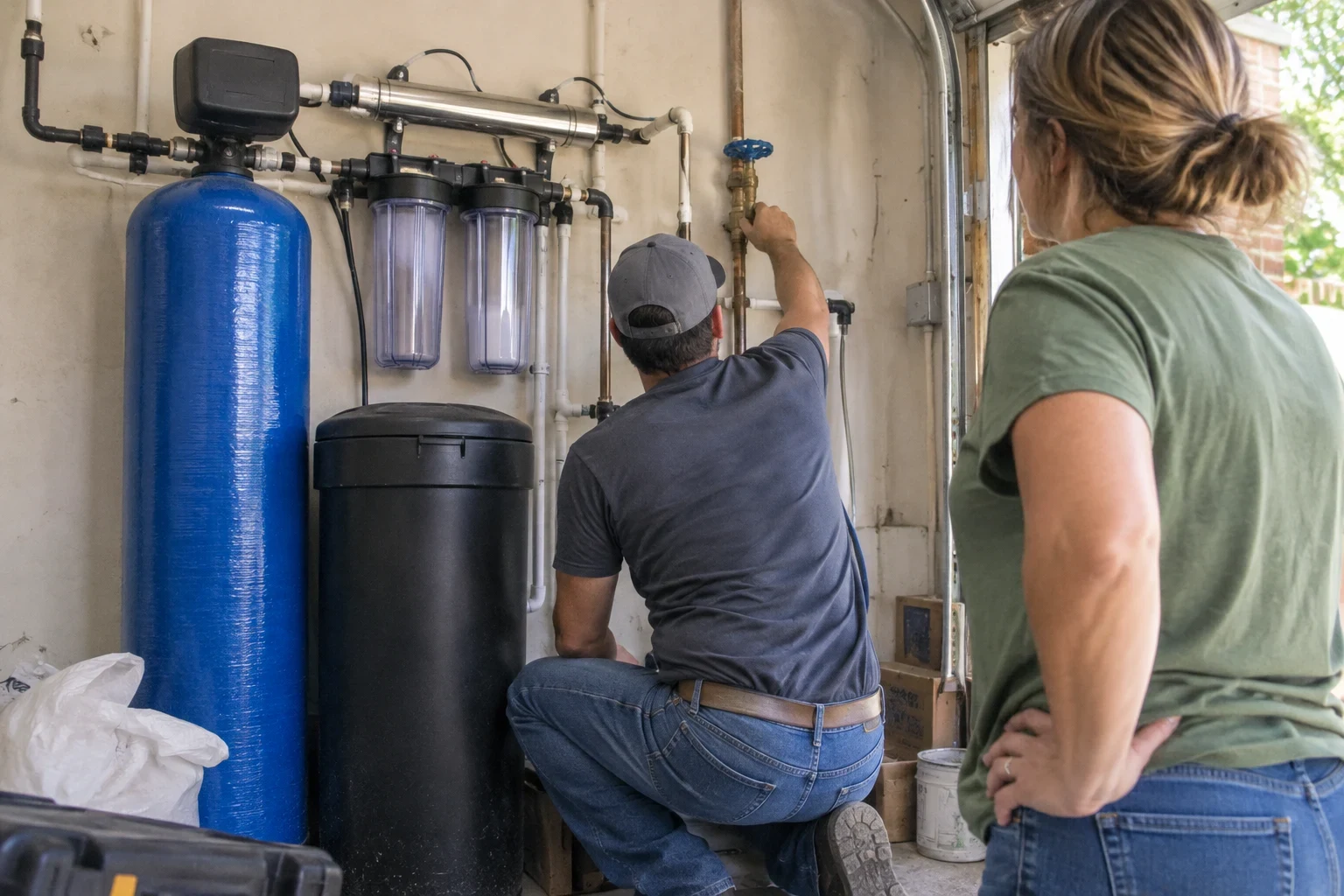
- A softener needs both a drain and an electrical outlet. A salt-free unit needs neither, so there are more spots in your home where it can go.
- A softener lost to storm damage
- When a surge or standing water has ruined an older unit's control valve, it is a sensible time to think about what should take its place.
What to expect from first call to finished install
- 1
A free test at your tap
Pick a time on the phone and we come to your home with a test kit. We draw water from a kitchen or bathroom faucet, read the results with you, and explain each number in plain terms.
- 2
A straight recommendation
When a salt-free conditioner suits your water, we walk you through the tank size and any prefilter it needs. When it doesn't, we tell you plainly and name the system that will serve you better.
- 3
The installation visit
Most jobs take part of a day. The water is off only for a short stretch while we put down floor protection, tie the system into the main line and pressure-check each fitting for drips.
- 4
A walkthrough before we leave
We show you where the bypass is, how to swap the prefilter and roughly when the media will need a look. You end the day knowing how to care for the system.
What shapes the price
Every home gets its own number, based on what the test shows and how your plumbing is laid out. Installation itself is free, so the quote reflects the equipment and any extra filtration. We go over it line by line on the phone so nothing turns up later.
- Size of your home and peak flow
- More bathrooms and more people using water at once call for a larger tank with more media.
- Hardness and other readings
- Very hard water, chlorine or traces of iron may call for a carbon or specialty prefilter ahead of the conditioner.
- Where the main line is
- An easy connection in a garage costs less to set up than a line that needs rerouting around a slab or finished wall.
- Removing old equipment
- Taking out a damaged softener or an old filter housing adds a little work, and we include it in the quote.
Questions about salt-free conditioners
- Will my water feel soft?
- Not the way softened water does. The minerals stay in the water, so you won't get that slippery feel in the shower. What you get is far less scale on fixtures, glass and inside your water heater.
- Will I still see spots on dishes and glass shower doors?
- You may see some light spotting when water dries on a surface, because the minerals are still present. The difference is that it wipes off easily instead of baking into a hard crust.
- What maintenance does it need?
- Change the sediment prefilter on the schedule we give you, usually a few times a year depending on your water. The conditioning media lasts much longer and is replaced only when it is worn out. There is no salt and no regeneration cycle.
- What happens during a power outage?
- Nothing changes. The system has no electrical parts, so it keeps treating water as long as water is flowing. If there is a boil-water notice after a storm, follow it, because a conditioner does not disinfect water.
- What warranty comes with the system?
- We warrant the systems we install: lifetime warranty on tanks and ceramic discs, 5 years on the control valve, circuit board and filter media, and 1 year on labor. We explain what that covers on your specific unit when we go over your quote.
- Do you install outside Lockhart?
- Yes. We also work with homeowners in Luling, San Marcos, Kyle, Buda, Cedar Creek and Redwood. The free water test is the same wherever you live.
Find out if salt-free is right for your water
A short visit and a test at your tap will tell us whether a conditioner will do the job. Call, and we will set up a time that suits you.